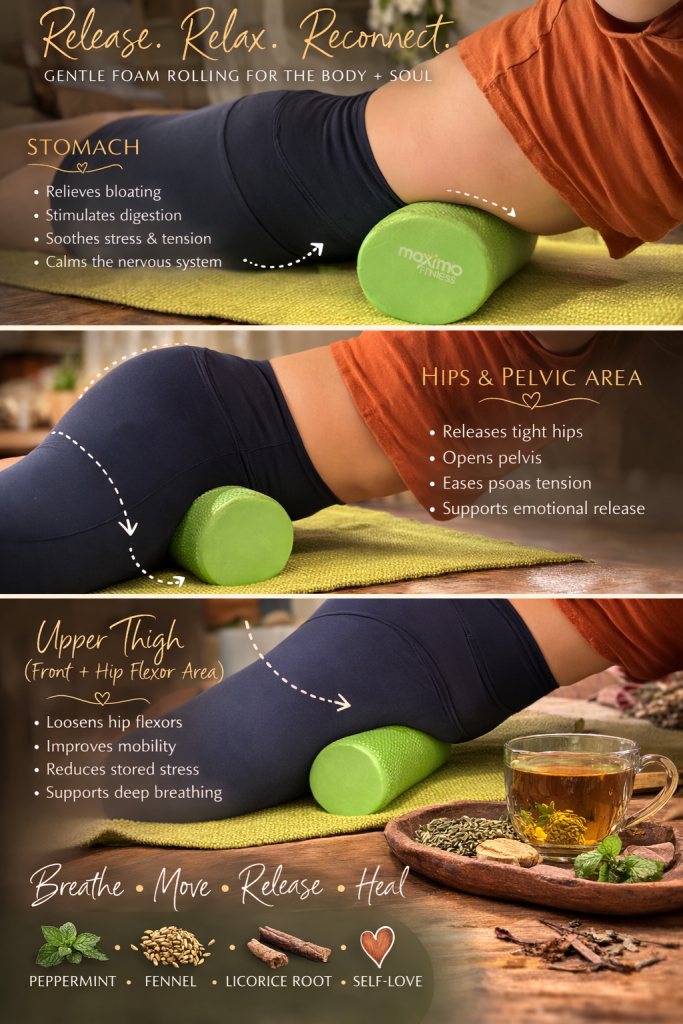
There are moments when the body tells us it is holding too much. The stomach feels tight or bloated, the hips feel heavy, and the lower belly carries a quiet pressure that is hard to describe. Often we try to think our way through stress, but the body has its own language. One of the simplest ways to listen to that language is through gentle physical touch and movement.
A foam roller—something many people associate with athletes and stretching routines—can also become a powerful self-care tool for the belly, hips, and upper thighs. With slow movement, steady breathing, and a warm cup of herbal tea nearby, the body can begin to release tension that has been sitting quietly beneath the surface.
Why the Belly and Hips Hold So Much Tension
The stomach, pelvis, and hips are central areas of the body where many systems meet. Digestive organs, reproductive organs, deep stabilizing muscles, and the nervous system all interact here.
When stress builds, people often experience:
• Tight hip flexors and psoas muscles
• A bloated or full stomach
• Lower back tension
• Pelvic heaviness
• Shallow breathing
The body naturally tries to protect itself during stress by tightening muscles and limiting movement. Over time, that protective response can create stiffness and discomfort.
Gentle pressure and movement with a foam roller can help interrupt that cycle.
How a Foam Roller Helps the Body Release
A foam roller works by applying slow, controlled pressure to muscles and connective tissue. When used around the stomach, hips, and upper thighs, several things begin to happen.
Improved circulation
The rolling pressure increases blood flow to the muscles and tissues. This brings oxygen and nutrients while helping remove metabolic waste that contributes to soreness and stiffness.
Relaxation of the hip flexors and psoas
The psoas muscle runs deep through the abdomen and connects the spine to the legs. It is often called the “stress muscle” because it tightens during emotional or physical tension. Rolling the hip crease and upper thighs can encourage this muscle to soften.
Support for digestion
Gentle movement and pressure near the abdomen can stimulate digestive activity. Many people notice reduced bloating, gas relief, or a lighter feeling in the stomach afterward.
Release of stored tension
Muscles and fascia (connective tissue) can hold patterns of tension from posture, stress, or emotional experiences. Slow pressure can signal the nervous system that it is safe to let go.
The Role of Breath During Rolling
Breathing is one of the most powerful tools for releasing tension in the belly.
While using the foam roller, try breathing slowly into the stomach. Let the belly expand on the inhale and soften on the exhale. When the breath deepens, the nervous system shifts toward a calmer “rest and digest” state.
This combination of pressure and breath allows the body to relax more deeply than movement alone.
Emotional Release Through Physical Touch
Humans naturally gravitate toward physical methods of comfort when emotions become heavy. Think about the instinct to hold your stomach when you feel anxious, stretch your hips after a long day, or rub your neck when stressed.
These responses are not random. The body is trying to regulate itself.
Gentle touch, movement, and pressure can sometimes unlock emotions that have been sitting quietly in the body. A person may feel a sudden sense of relief, deeper breathing, or even unexpected emotions rising to the surface.
This is not unusual. The body and mind are deeply connected, and caring for the physical body often creates space for emotional release.
Supporting the Body with Herbal Tea
While the foam roller supports the muscles and tissues, herbal tea can help calm the digestive system from the inside.
A simple blend of peppermint, fennel seed, and licorice root offers excellent support for the stomach.
Peppermint
Peppermint relaxes the muscles of the digestive tract and helps reduce gas, bloating, and stomach cramps. It also has a cooling effect that can soothe irritation in the gut.
Fennel Seed
Fennel has been used for centuries to support digestion. It helps reduce bloating, encourages healthy intestinal movement, and can ease that uncomfortable “full” feeling in the stomach.
Licorice Root
Licorice root gently soothes the lining of the stomach and supports the body’s stress response. It has mild anti-inflammatory properties and can help calm digestive irritation.
Together, these herbs create a warm, calming tea that supports the stomach while the body releases tension through movement.
A Simple At-Home Practice
Using a foam roller for the belly and hips does not require a complicated routine. A few minutes of slow movement can make a noticeable difference.
Start by placing the foam roller under the upper thighs or hip crease. Slowly roll forward and back, breathing deeply. You can also gently rock side to side to explore areas of tightness.
Move gradually toward the sides of the hips and upper thighs, pausing when you find tight spots. Allow the pressure to soften the muscle rather than forcing it.
For the abdomen, use very light pressure or gentle rocking movements. The goal is to encourage relaxation, not deep compression.
Take your time. Let your breath guide the pace.
Listening to the Body
Sometimes the body simply needs permission to slow down. Tight hips, a full stomach, or tension in the lower belly can be signals that stress has accumulated and it is time to release something—physically, emotionally, or both.
A foam roller, warm herbal tea, and a few minutes of mindful breathing can become a small ritual of self-care that reconnects you with your body.
You do not need a complicated program or expensive equipment. Sometimes the most powerful healing tools are the simplest ones we can use right at home.
 Soul Journey Guidance
Leave a comment